
Dave Krusen was behind the drums when Pearl Jam was just beginning to find its identity. Alongside Jeff Ament, Stone Gossard, Mike McCready and Eddie Vedder, he helped create Ten, an album that would go on to become one of the defining rock records of the 1990s. More than three decades later, Krusen still speaks about those early days without turning them into mythology — remembering a time when a handful of musicians simply felt that something special was happening.
In this exclusive interview with Music Pocket Magazine, Krusen looks back on Pearl Jam’s earliest rehearsals, the moment Eddie Vedder arrived, his drumming influences and the making of Ten. He also reflects on life after the band, his work with Candlebox and Unified Theory, his return to the stage with Pearl Jam, today’s music scene and the projects keeping him busy.
Dali: You started playing drums when you were just eight years old. Do you remember what first attracted you to the instrument and the moment you picked up a pair of drumsticks? Was there someone in your family who influenced you, or was it entirely your own interest?
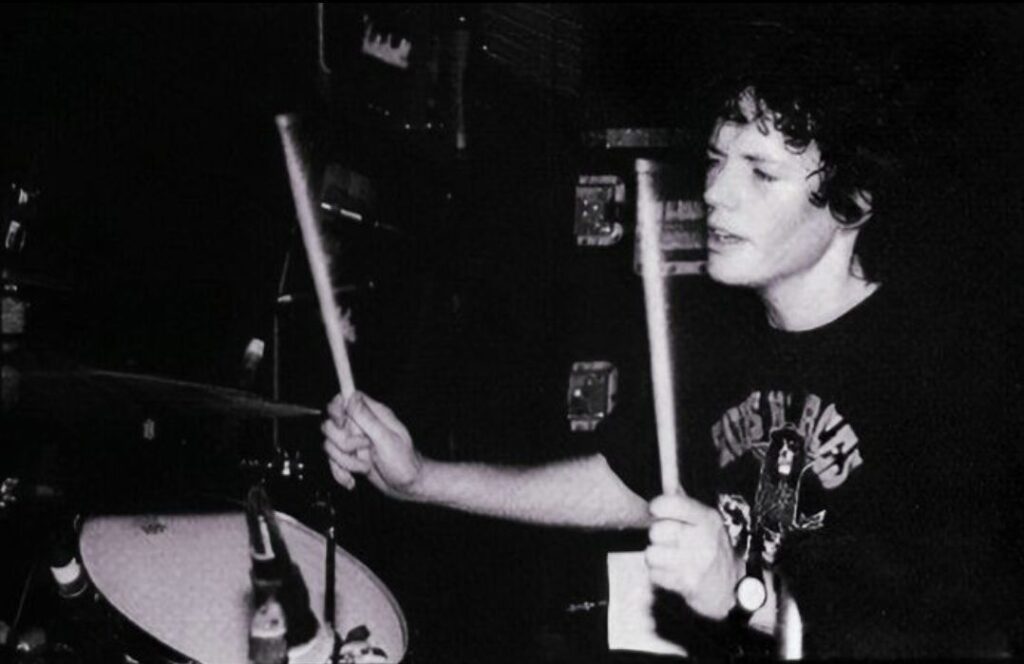
Dave Krusen: As a kid, I loved banging on things. I used to play on the stove’s range hood with wooden spoons. I destroyed a lot of pie tins. I played on buckets, too.
One day, I found my older brother’s snare drum tucked away somewhere. He’s 11 years older than me and had played in the school band. I didn’t even know that until I found his drum.
I started practicing rudiments and joined the school band in fifth grade. I got my first drum kit a few years later, and by the time I was 13, I was playing in a band.
Dali: Looking back more than three decades later, to the time when you joined Jeff Ament and Stone Gossard and became part of what would soon become Pearl Jam, how would you describe the moment you first realized this wasn’t just another band?
Dave Krusen: I was a huge Mother Love Bone fan. When I heard Jeff and Stone were looking for a drummer, I managed to get in touch with Jeff, and he invited me to come and jam.
They weren’t holding auditions. It was just a little jam session with Jeff, Stone and Mike. We played through a few of Stone’s riffs. Afterwards, he gave me his demo, and Jeff said, “Why don’t you leave your drums here and come back tomorrow?”
I was completely blown away. I went home and started listening to Stone’s demo.
By the next day, we were really starting to lock in together, and I think we all felt that something good was happening. I definitely had the feeling that this band sounded better than anything I’d heard before.
And then, a few days later, Eddie showed up…
And — WOW.
Dali: You’ve listened to a remarkably diverse range of drummers, from jazz greats Roy Haynes and Max Roach to rock legends John Bonham, Charlie Watts and Ian Paice, and later Stewart Copeland. What did you take from their different styles, and how did those influences help you find your own sound?
Dave Krusen: All the great jazz drummers I grew up listening to taught me to appreciate the ability to capture the mood of the music itself — to try to convey what the song is saying and how it expresses its feeling.
Bonham, Watts and Copeland were brilliant at exactly that.
Steve Jordan was also a huge influence on me. I think his pocket is the best.
Keith Richards’ album Talk Is Cheap was probably my biggest influence during my time in Pearl Jam.

MPM: When you think about your playing today, what would you consider your most recognizable signature as a drummer? Is there something about your groove or approach to a song that immediately makes you think, “That’s me”?
Dave Krusen: I’d say that I always try to support the song with my playing.
If there’s a vocal, that’s the most important thing happening, and it needs to be supported by the groove and the melody.
I try to connect with the bass and rhythm guitar, and then catch those sparks coming from the lead guitar.
MPM: When you listen to Ten today, do you hear it differently than you did when you were making it? Is there anything you’d change about your drumming now, or would you leave it exactly as it is?
Dave Krusen: No. I’m not sure why I’d want to change anything I did on Ten.
It still sounds just as good to me today as it did when we were making it.
Dali: AfterTen, you went on to play with Hovercraft, Candlebox, Unified Theory and other projects. How important has it been for you over the years to be recognized not just as Pearl Jam’s original drummer, but as a musician with your own path and identity?
Dave Krusen: My career after Pearl Jam has covered a very wide range of bands and musical styles.
I’ve played with so many talented people that I’d have a hard time naming them all.
The success of Pearl Jam, and of the album we made, opened up many more opportunities for me.
I’ve played on records I’m very proud of and toured around much of the world.
Dali: If you could go back and have a conversation with your younger self from that period, what would the Dave Krusen of today say to him?
Dave Krusen: If I could go back, I’d tell myself:
“Slow down.”
Dali: When you found yourself behind the drums with Pearl Jam again in 2022, playing with the band more than three decades later, what was going through your mind just before the first song? Did that old musical chemistry return immediately?
Dave Krusen: Yes, by 2022, it had been more than three decades since I’d played most of those songs with the guys. But we’d rehearsed and performed together in 2017 for the Rock & Roll Hall of Fame induction, so it wasn’t as though I hadn’t played with them at all.
Playing such a huge show, under that much pressure, with everything being broadcast on television, was like having a hundred rehearsals.
In 2022, they just asked me to join them while Matt was sick, so I was simply having fun.
I didn’t feel any pressure.
And it was really a lot of fun.
Dali: Throughout your career, you’ve worked with far more musicians than the wider public probably realizes, from Chris Robinson and Jonathan Wilson to various studio and live projects. Is there a collaboration, session or recording that very few people know about but that remains especially close to your heart?
Dave Krusen: Actually, something I’d love to get back into more, and something people might not know about, is the kind of gigs we used to play in Los Angeles between 2008 and 2016.
Before I started touring almost constantly from 2015 until the pandemic, I used to play local venues like Crane’s and the Piano Bar in Hollywood with friends.
There were incredibly talented people involved, including D. Henry Fenton, George Stanford, La La La Birdtime, Jessie Cole, Foster Timms and Ed Matuzzi.
It was a wonderful music community.
MPM: Your biography mentions that you’ve recorded and/or performed with the Foo Fighters, although that part of your career isn’t widely documented. What exactly did you do together, and what do you remember most about the experience?
Dave Krusen: Hmm… which biography? Wikipedia?
I’d never put that in my bio. I never said I recorded with the Foo Fighters.
My friend Rami is the keyboard player in the band, and once, when I was in Argentina while they were playing there, they invited me to join them for one song.
Dali: Pearl Jam recently performed with Abe Laboriel Jr. on drums. How do you see his influence on the band’s sound and energy?
Dave Krusen: Abe is fucking awesome.
I wasn’t able to make it to the Ohana Festival to see them, but it’s really a shame he won’t be their new drummer.
I know he was their first choice.
Dali: If you hadn’t chosen the drums, which other instrument would you most like to play, and why?
Dave Krusen: If I hadn’t played drums, I would have played bass or guitar.
After rhythm, melody is what I love most.
Dali: How do you view today’s music scene and the growing presence of artificial intelligence in music? Where, for you, does technology stop being a useful tool and start threatening the human element of music?
Dave Krusen: If you can perform live what you’ve recorded, I think technology is a good thing.
AI seems like a distraction to me — at least while we, as human beings, still have the option of simply choosing not to use it.
Dali: Are you still in touch with the members of Pearl Jam? Has your relationship changed over the years?
Dave Krusen: I’m occasionally in touch with the guys from Pearl Jam.
But we don’t talk about the band.
Jeff just sent me his book, and I absolutely loved it.
He’s one of the coolest people I’ve ever met.
He was that way back then — and he still is.
Dali: Are you currently working on any personal projects, a solo album or new collaborations? What can we expect from you in the near future?
Dave Krusen: I’m making music on my own, just for fun.
I’ve always been in bands, so now it’s fun to do everything myself — the instruments, the artwork and everything else.
I’m currently in a few bands: The Vases here in Seattle, Buoy Byrds in Los Angeles, and I’m also working on a new band with my friend Cody Davis here in Seattle.
Dali: What advice would you give young musicians who are just starting out and trying to find their own way in music?
Dave Krusen: To young musicians just starting out, I’d say: respect the art form, practice seriously, play your hearts out, stay away from partying, and support one another.
And most importantly, don’t let the ups and downs of success — or, more accurately, other people’s projections of what they consider success — affect what you do.
Don’t let anyone take away your love of music or the joy of creating it.
Dali: Looking back at your entire career outside Pearl Jam, is there a recording, band or moment you’re particularly proud of that you feel hasn’t received the attention it deserves?
Dave Krusen: After Pearl Jam, I was part of a whole bunch of great bands and records.
While I was in Candlebox, we made Happy Pills, an album I really love, and I also played on all their albums through Wolves.
Unified Theory was a great band.
I simply never stopped working.
I play music because it makes me feel good.
That’s why we all do it, right?Dali: Is there a younger drummer from today’s generation whom you particularly follow or would single out as someone bringing something new and exciting to music?
Dave Krusen: There are so many great young drummers today that I wouldn’t even know where to start.
But my favorite is my son Jagger.
He uses his middle name and performs as Jagger Finn. He’s a great drummer and guitarist, bassist, producer and singer.
Check out what he’s doing. He’s doing well.
And he’s accomplished it all entirely on his own.
Dali: What’s your favorite book, or a book you find yourself returning to most often?
Dave Krusen: I’m currently reading The Enchanters by James Ellroy.
I’ve read most of his books, as well as Richard Russo’s — I’m a big fan of his work.
I also love books about architecture.
Dali: Finally, is there anything you’d like to say to the people who have followed your work over all these years?
Dave Krusen: To everyone who’s followed my drumming since Pearl Jam, I’d like to say:
THANK YOU. I appreciate it.
At the end of his email, Dave added:
“Thank you for having me. Great questions!” — Dave Krusen