
Franklin Vanderbilt picked up his first pair of drumsticks at age five in Chicago, a city whose blues, soul, jazz and gospel roots would go on to shape everything he plays. That early fascination with rhythm turned into a decades-long career behind the kit for some of music’s biggest names, most notably a long stretch performing alongside Lenny Kravitz, alongside collaborations with Stevie Wonder, Chaka Khan, Stanley Clarke and Richie Kotzen.
In recent years, Vanderbilt has expanded well beyond drumming — into songwriting, production, guitar and vocals, releasing new music under his own name and developing Royal Cadence, a cultural house built around music ownership, craftsmanship and lifestyle. His new single, “Everybody’s Talking About Love,” and the upcoming album Inside My Silence, produced with Alan Parsons, mark what he describes as a new chapter built on authenticity and real musicianship.
I contacted Franklin for an in-depth conversation on Instagram — we talked about his career, the LOCK Theory, and what music means to him after a lifetime spent on the world’s biggest stages. He got back to us within just a few hours. Now you have a chance to get to know him better, enjoy the read.
He is Franklin Vanderbilt
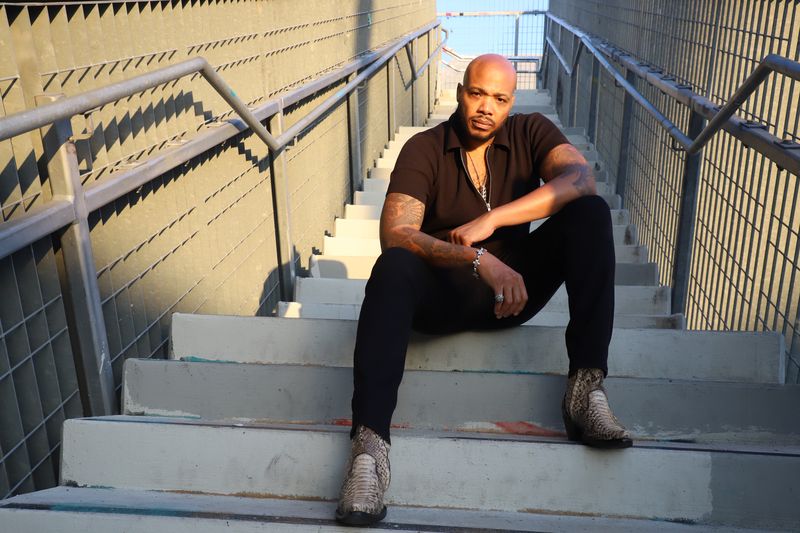
Franklin, you started playing drums at the age of five. What first attracted you to the drums, and when did you realise that music could become your career?
I was five years old when I first became fascinated with the drums. There was something about the physicality of the instrument that immediately spoke to me. I loved the sound, but more than that, I loved the idea that you could create rhythm and movement with your hands and feet.
At that age, I obviously wasn’t thinking about a career. I was simply responding to something that felt very natural to me. Music became a language before I really understood what that meant.
As I got older, I began realizing that I wasn’t just interested in playing drums — I was interested in understanding music. I wanted to know why certain rhythms worked, why certain songs moved people, and how musicians communicated with one another without necessarily saying a word.
Eventually, I understood that music wasn’t something I wanted to do as a hobby. It was something I needed to do. That’s when the possibility of making it my life became very real.
You grew up in Chicago, a city with a rich musical history. How did growing up there influence you as a musician?
Chicago had an enormous influence on me.
Growing up there, you are surrounded by music. Blues, soul, jazz, gospel, rock, R&B — all of these sounds become part of the environment. Chicago teaches you about groove, but it also teaches you about authenticity.
I think one of the greatest things Chicago gave me was an appreciation for musicians who could make you feel something. It wasn’t just about technical ability. You had to have soul.
Chicago also gave me a certain toughness and work ethic. There is a directness to the city. You learn to be prepared, you learn to listen, and you learn to earn your place.
Even though I’ve been based in Los Angeles for many years, Chicago is still part of my musical DNA.
Looking back at the beginning of your career, what were some of the most important experiences that helped shape you as a drummer?
The most important experiences were the ones that taught me how to listen.
When you’re young, you can become very focused on what you’re playing. As you mature, you realize that your job is not simply to play your instrument. Your job is to understand the entire musical picture.
I learned about discipline, timing, dynamics, restraint and preparation. I learned that sometimes the most powerful thing you can play is nothing at all.
I also learned that every situation is different. A great drummer has to be able to walk into a room, understand what the music needs, understand what the artist needs, and adapt.

Those lessons stayed with me long after I stopped thinking of myself simply as a drummer.
You have performed with some of the biggest names in music. What have you learned from working with artists at that level?
I’ve learned that greatness is rarely accidental.
When you’re around artists operating at the highest level, you see the amount of preparation, discipline and attention to detail that goes into what audiences eventually experience as something effortless.
I’ve also learned that every great artist has a very strong sense of identity. They know who they are.
But perhaps the biggest lesson is humility. You can be incredibly accomplished and still remain a student of music.
Every major artist I’ve worked with has taught me something different. Sometimes it was about performance. Sometimes it was songwriting. Sometimes it was simply watching how someone handled pressure.
Those experiences became part of my education.
You spent many years performing with Lenny Kravitz. How would you describe that period of your career?
That period was incredibly important to me.
Working in an environment at that level teaches you about performance, discipline, energy and consistency. When you’re performing for large audiences, there is nowhere to hide. You have to be completely present.
It was also an opportunity to understand what it means to create an experience rather than simply perform a song.
What did you learn from Lenny about performing, songwriting and connecting with an audience?
One of the biggest things I learned was that an audience can feel whether you believe in what you’re doing. Performance isn’t simply about playing the notes correctly. It’s about communicating something. The audience has to feel that you’re actually inside the music.
I also learned the importance of simplicity. Sometimes you don’t need more. You need the right thing.
And as a songwriter, I’ve come to understand that the strongest songs usually begin with something emotionally truthful. Technical ability can help you execute an idea, but emotion is what gives the idea life.
You have also worked with artists such as Stevie Wonder, Chaka Khan, Stanley Clarke and Richie Kotzen. Is there a particular collaboration that had a lasting impact on you?
Every one of those experiences affected me differently, and I don’t think I could reduce them to one single lesson.
Working with artists of that caliber exposes you to extraordinary levels of musicianship, but it also shows you that there are many different ways to approach music.
Stevie Wonder taught me a great deal simply by being in his musical environment. Chaka Khan represents an incredible combination of power, soul and musicality. Stanley Clarke is a phenomenal example of what happens when virtuosity and musical imagination come together. Richie Kotzen showed me another side of intensity, musicianship and individuality.
The lasting impact wasn’t just the individual performances. It was the realization that there is always another level to reach.
You have spoken about your LOCK Theory — Listening, Observing, Control and Knowledge. How important are these four principles to your work today?
LOCK is something that has become much more meaningful to me as I’ve gotten older.
Listening means being receptive. You have to listen to the music, to other musicians, to your environment and sometimes to your own instincts.
Observing means paying attention. There is an incredible amount you can learn simply by watching how other people work.
Control is knowing when to play and when not to play. It applies to music, performance and life. Having the ability to do something doesn’t mean you always need to do it.
And Knowledge comes from experience. You accumulate knowledge through years of playing, making mistakes, studying, listening and being around great musicians.
Those four principles aren’t limited to drumming. They apply to everything I’m doing now.
After so many years of performing, how has your approach to playing drums changed?
I’ve become much more interested in serving the music than demonstrating the instrument.
When you’re younger, there can be a tendency to think about what you can play. As you mature, you start asking a different question: What does the music need?
Sometimes it needs power. Sometimes it needs space. Sometimes it needs one particular note.
I’ve also become much more aware of dynamics and silence. A great groove isn’t necessarily about how much you play. It’s about creating the right movement and allowing the other musicians to breathe.
I think maturity gives you the confidence to simplify.
What do you think makes a great drummer?
A great drummer has to have time, feel and ears.
Technique is important, but technique without feel doesn’t necessarily move anybody.
A great drummer understands the pocket. They understand dynamics. They understand the emotional character of a song.
And they listen.
The drummer is part of the foundation of a band, so you have to understand how your playing affects everybody else.
For me, the greatest drummers aren’t necessarily the ones who play the most complicated things. They’re the ones who can make a song feel inevitable.
Over the years, you have expanded beyond drumming into songwriting, production and vocals. What inspired you to explore these other sides of music?
Eventually, I realized that I had more to say.
Drumming was my first language, but music had always been much bigger than the drums for me. I was hearing melodies, harmonies, arrangements and lyrics.
At some point, I couldn’t continue keeping those ideas inside my head. I had to give them a voice.
Moving into songwriting, production, guitar and vocals has allowed me to see the entire picture.
I’m still a drummer. That will always be part of who I am. But now I’m able to approach music from multiple perspectives.
That’s been incredibly liberating.
Your recent work represents a new chapter in your career. How would you describe the music you are creating today?
I would describe it as authentic, guitar-driven music rooted in real musicianship, songwriting and emotion. I would also describe it as rock ‘n’ roll with elements of soul and folk music.
I’m not trying to recreate the past, but I’m also not interested in abandoning everything that made music meaningful to me.
I love the sound of real instruments. I love great guitar tones. I love strings. I love musicians interacting in a room and responding to one another.
At the same time, I’m very much interested in moving forward.
This chapter is about taking everything I’ve learned over decades and putting it into music that represents who I am now.
Your latest single, “Everybody’s Talking About Love,” explores themes of love and human connection. What inspired the song?
Love is one of those subjects that never becomes irrelevant.
We’re living in a time when there is an enormous amount of division, noise and disconnection. I wanted to create something that brought the conversation back to something universal.
Everybody’s Talking About Love isn’t simply about romantic love. It’s about the human need for connection, compassion and understanding.
That’s why the song means so much to me.
I also wanted the music itself to feel alive. Recently, I had the opportunity to hear a string quartet perform on the song in a beautiful studio environment, and hearing the violins, viola and cello interacting with the music was incredibly powerful.
It reminded me why I believe in real musicianship and why authenticity still matters.
You are also developing Royal Cadence. What can you tell us about the project and what you hope to achieve with it?
Royal Cadence is an extension of my creative vision beyond music. Royal Cadence is a cultural house I founded, built on owning music and expanding from there. We’ve just completed a ten-song album, Inside My Silence, produced with Alan Parsons. I own the masters through Royal Cadence. We’re starting with that IP, building value through distribution, radio, and sync, then expanding into high-end products and experiences. We’re raising capital to scale that from music into a luxury ecosystem.
I’ve always believed that creativity doesn’t have to live inside one category. Music, design, craftsmanship, fashion, jewelry, leather, lifestyle and culture can all exist within the same creative universe.
With Royal Cadence, I’m interested in building something with identity and longevity — something that reflects a certain level of craftsmanship and sophistication rather than simply creating products for the sake of creating products.
Ultimately, I want it to become a meaningful brand and business that represents creativity, quality and individuality.
You have spoken about Inside My Silence. How important is silence and time away from the stage to your creative process?
It’s extremely important.
We’re surrounded by noise all the time — phones, social media, opinions, information, music, business and constant communication.
Silence allows you to hear yourself. There’s so much information out there on social media and YouTube. I believe that many people are extremely focused on looking outward, but they forget to look inward. There’s so many people searching for answers and information, but they forget to look inside themselves. Motivational speaking can be a helpful, but at the end of the day, the motivation, determination and discipline must come from inside yourself. Sometimes I think too much information is more of a distraction than helpful. I’m a true believer that answers and solutions can come from being silent and feeling exactly what YOU want and desire.
For me, Inside My Silence represents that internal space where ideas can develop before they’re exposed to the outside world.
Sometimes the most important part of creating isn’t playing. It’s listening to what hasn’t been played yet.
I’ve learned that I don’t have to constantly be producing something to be creative. Sometimes stepping away is part of the creative process.
After decades in the music industry, what still motivates you to create and perform?
The fact that I still have something to say.
That’s really it.
If I felt that I had already said everything I wanted to say, I wouldn’t need to make another record.
But I don’t feel that way.
In fact, I feel more creatively alive now than I have in many years because I have accumulated so many experiences.
I’m not trying to prove that I can be a musician anymore. I’m trying to express something meaningful.
That’s a very different motivation.
Music has changed enormously since you started your career. What do you appreciate most about today’s music scene, and what do you miss from earlier generations?
I appreciate the accessibility of today’s music world. An artist can create something in one part of the world and potentially reach someone on the other side of the planet almost immediately.
That’s extraordinary.
What I miss is some of the patience.
There used to be more emphasis on developing an artist, developing an album and allowing music to live with people.
Today, everything can become immediate — release it, promote it, move on.
I still believe in music that rewards repeated listening. There is a reason why people still listen to music that was made over 30 to 75 years ago. Why, because they took their time to make it. They took their time to develop artist, live life, and actually care about the process. Today, music can be made quickly. Just because something is made quickly, that doesn’t mean that it’s great. To me, social media advertises, Musicians, or should I say the life of a musician, as if it’s a hobby that you can just pick up. During my years of development, I was taught that being a musician was sacred. The process of becoming a great musician was treated as a privilege and a labor of love. Please do not misunderstand me: there’s still incredible Musicians in the world. Unfortunately, the business of Music is not much about music anymore. It is, but it isn’t. I highly care about Music business, but I’m a strong believer that if you make great music first, the Business will follow you. In any business, you must market and promote. What if you make a great song, I believe it will follow you forever.
I also miss some of the emphasis on musicianship and the experience of people actually playing together in a room.
That’s one reason I continue to value real instruments and real players so deeply.
What advice would you give to a young drummer who dreams of building an international career?
Learn your instrument, but don’t stop there.
Learn music.
Learn how to listen. Learn how to read a room. Learn how to work with people. Learn how to be prepared.
And understand that your reputation is built one opportunity at a time.
Be professional. Be dependable. Be humble enough to learn and confident enough to know your value.
Most importantly, don’t try to become someone else.
There are thousands of people who can imitate another musician. There is only one you.
Develop your own voice.
Is there still an artist you would love to work with or a musical project you would like to accomplish?
Absolutely.
I don’t think a real musician ever reaches a point where they say, “I’ve done everything.”
There are still artists I’d love to collaborate with, but I’m equally interested in creating projects that bring together different generations and different musical perspectives.
I’d love to continue making music that combines great songwriting with extraordinary musicianship and production.
And I’d like to create a body of work that people can look back on years from now and say, that was real.
That’s more important to me than simply checking another name off a list.
Finally, when you look at everything you have achieved so far, what are you most proud of?
I’m proud that I stayed true to the music.
I’ve had the privilege of performing with extraordinary artists and being part of some incredible musical experiences. I’m grateful for all of that.
But I’m probably most proud of the fact that I continued evolving.
I started as a five-year-old kid fascinated by drums. I became a professional drummer. I toured. I recorded. I played with artists I admired. I became a guitarist, songwriter, producer and vocalist.
And now I’m creating music under my own name.
That evolution means a lot to me because it represents the fact that you don’t have to stop growing simply because you’ve already accomplished something.
MPM Final Question: What does music mean to you today, after a lifetime spent behind the drums and on the world’s stages?
Music is my language.
It has been with me for virtually my entire life. Before I understood the music business, before I understood careers, records or stages, I understood the feeling of rhythm.
Today, music means something even deeper to me because I understand how powerful it can be.
I’ve seen music bring people together. I’ve seen it communicate things that words couldn’t communicate. I’ve experienced the incredible feeling of standing on a stage with other musicians and knowing, without speaking, exactly where the music is going.
After all these years, I don’t take that for granted.
I’m also at a point in my life where music isn’t about proving anything.
It’s about expression, connection and legacy.
I want to make music that feels honest. I want to work with great musicians. I want to continue learning. And I want to leave something behind that has meaning.
I started behind the drums, but I’ve come to understand that the instrument was never really the destination.
The music was.
And I’m still on that journey.